 NEW
NEW ENGAGE
 RESOURCES
 TOPICS
 EVENTS
Discipleship
Avoiding Toxic Empathy

Want Even More?
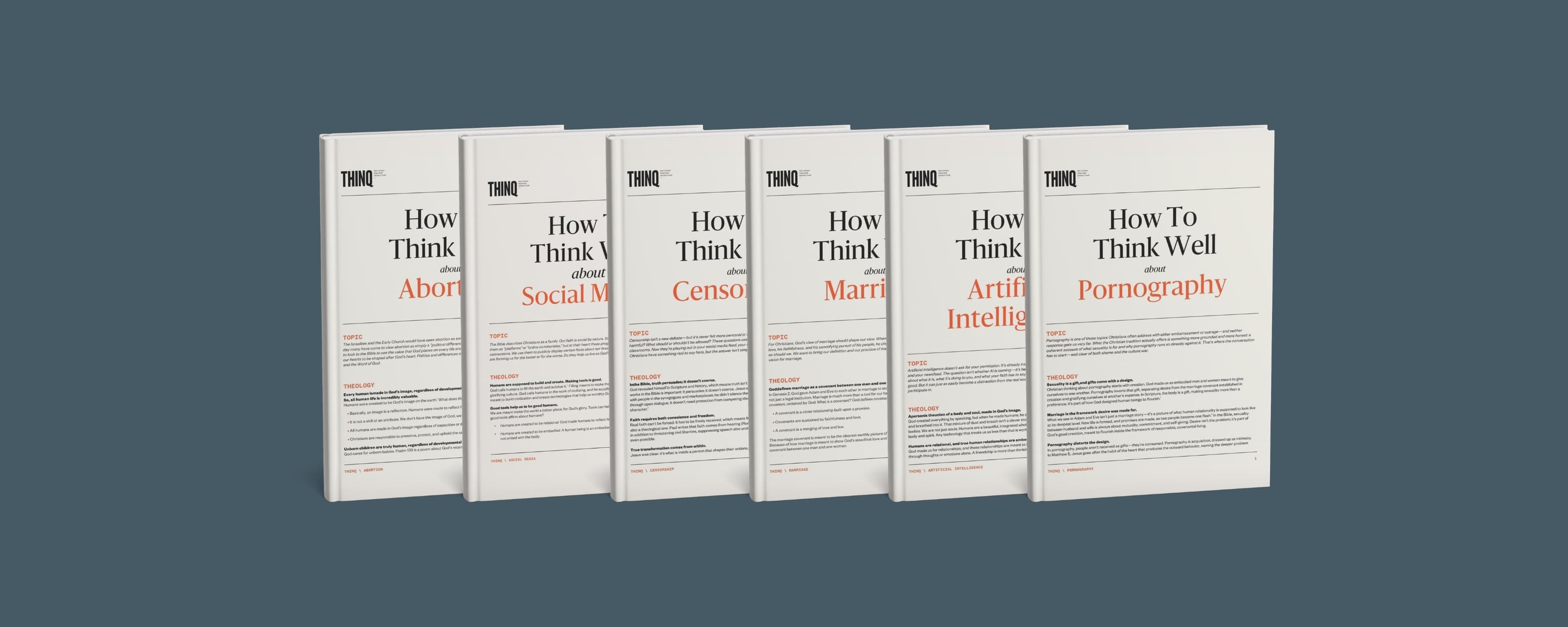
Go deeper with THINQ's Worldview Case Studies. Guided by the THINQ Framework—Theology, History, Inquiry, Nuance, and Questions—each case study explores today's most pressing cultural issues through the lens of a biblical worldview.
Recommended Talks
ALL The views and analysis expressed by this speaker are their own and do not necessarily reflect the views or positions of THINQ. We encourage you to listen broadly, consider multiple perspectives, ask good questions, and engage thoughtfully with differing viewpoints.
Most importantly, as the Bereans did in Acts 17, test what you hear against Scripture. Think well, seek truth, and examine everything carefully. If you are desiring a good rubric to analyze and reflect, we recommend reviewing our THINQ Framework.